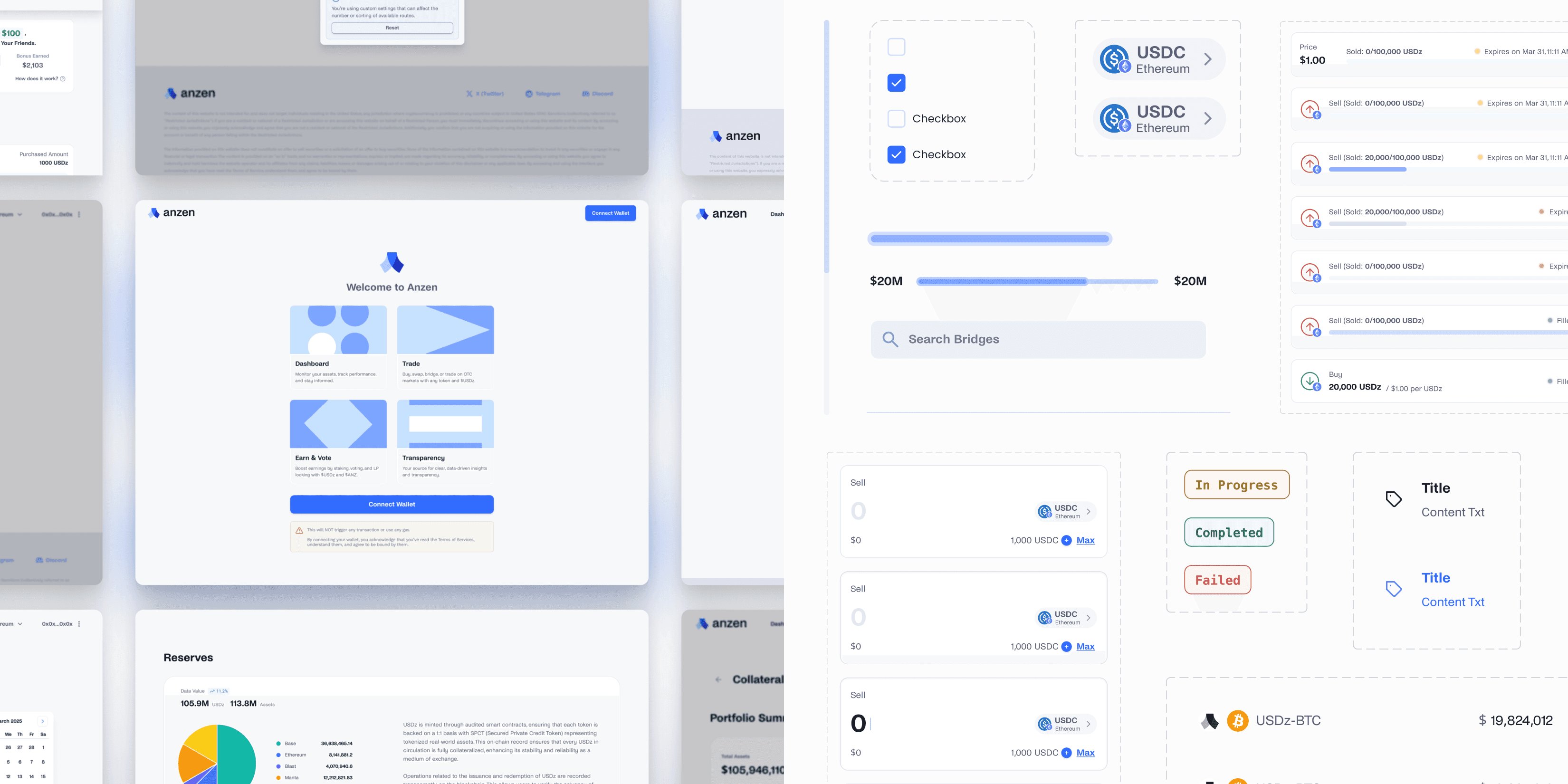
Anzen Finance is a DeFi protocol building institutional-grade stablecoin infrastructure backed by real-world assets. I helped unify the fragmented experience into a clear, scalable product.
My role
Led end-to-end UX audit to final hi-fi design
Defined and documented a scalable design system for product consistency
User research, prototyping, UI design
Key Outcomes
~20% reduction in redundant steps across key user flows
Improved task clarity and decision flow
Established consistent interaction patterns through a unified design system
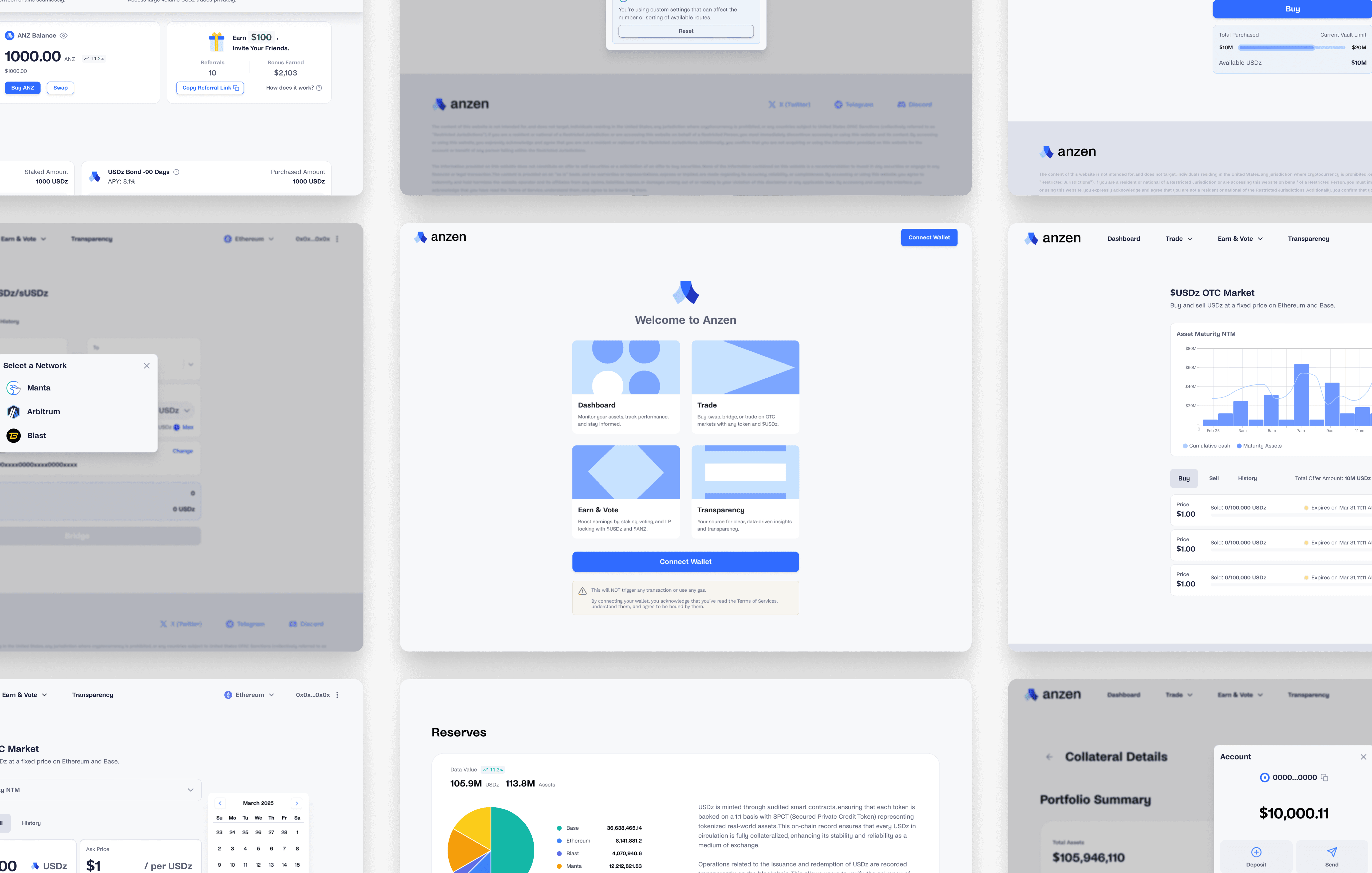
Unifying a fragmented DeFi experience into a clear, scalable product
Challenge:
Anzen Finance offered a wide range of advanced DeFi features, but the experience felt fragmented. Users struggled to understand where to go, how features related to each other, and what was happening during and after transactions.
The goal was to unify the experience, simplify core interactions, and give users confidence at every decision point.
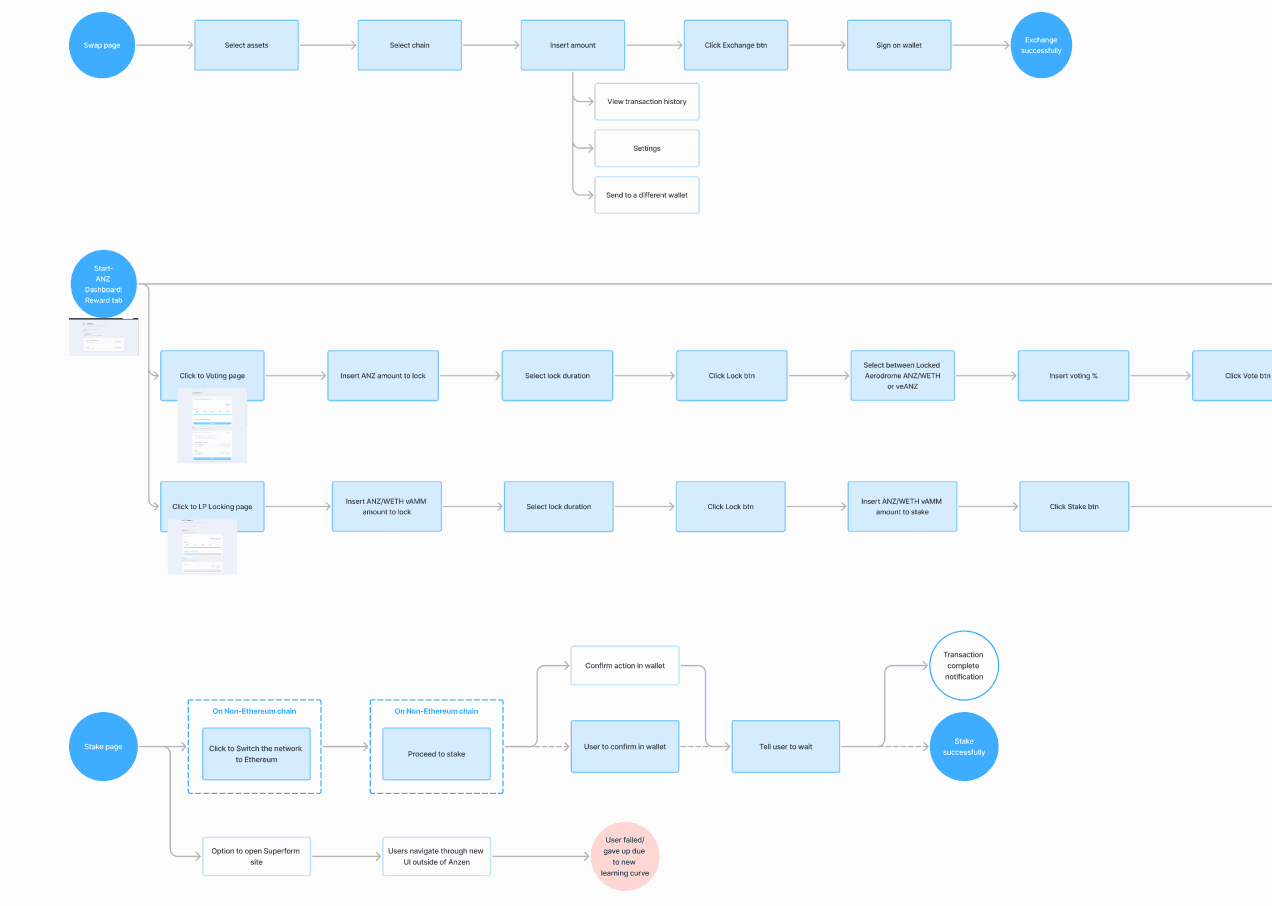
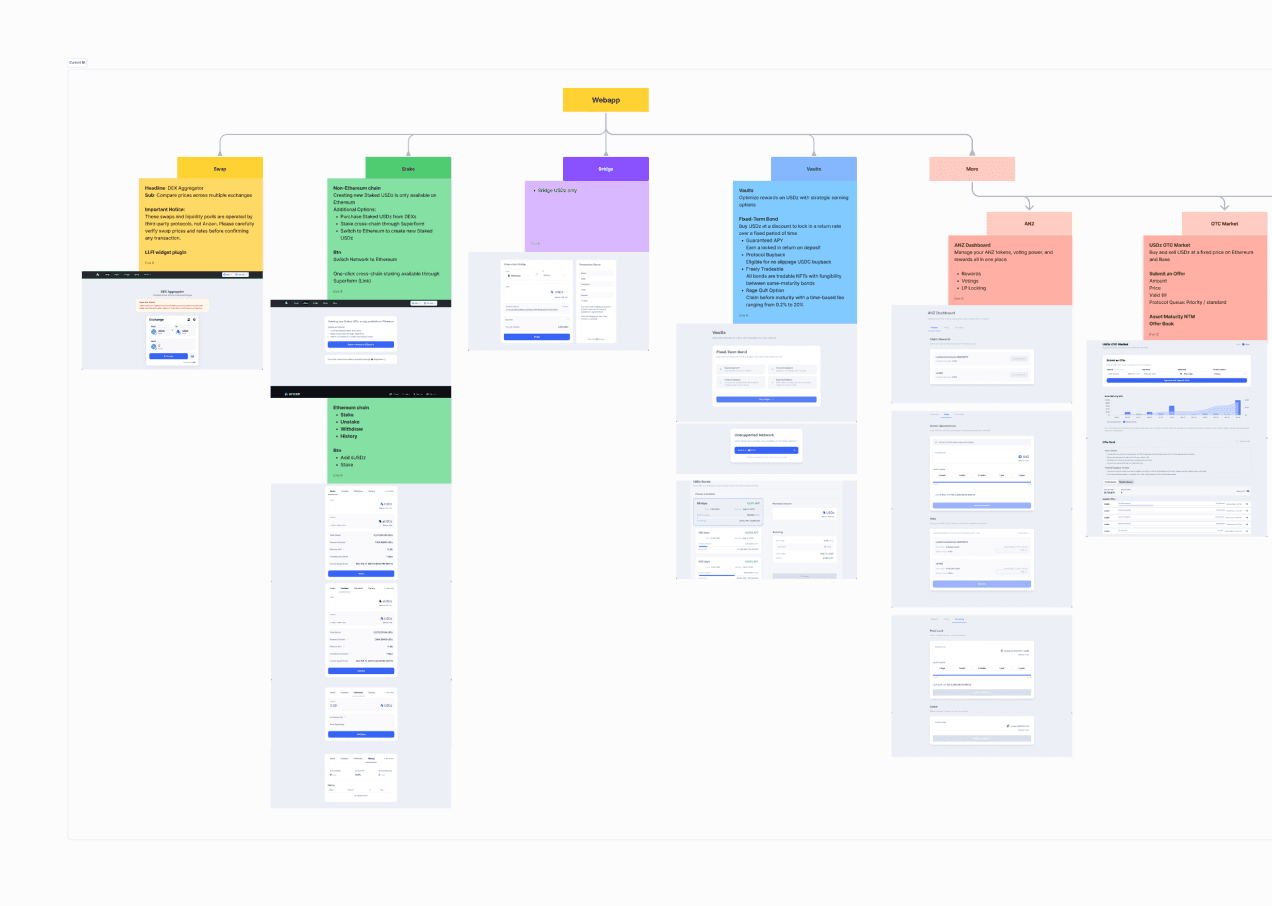
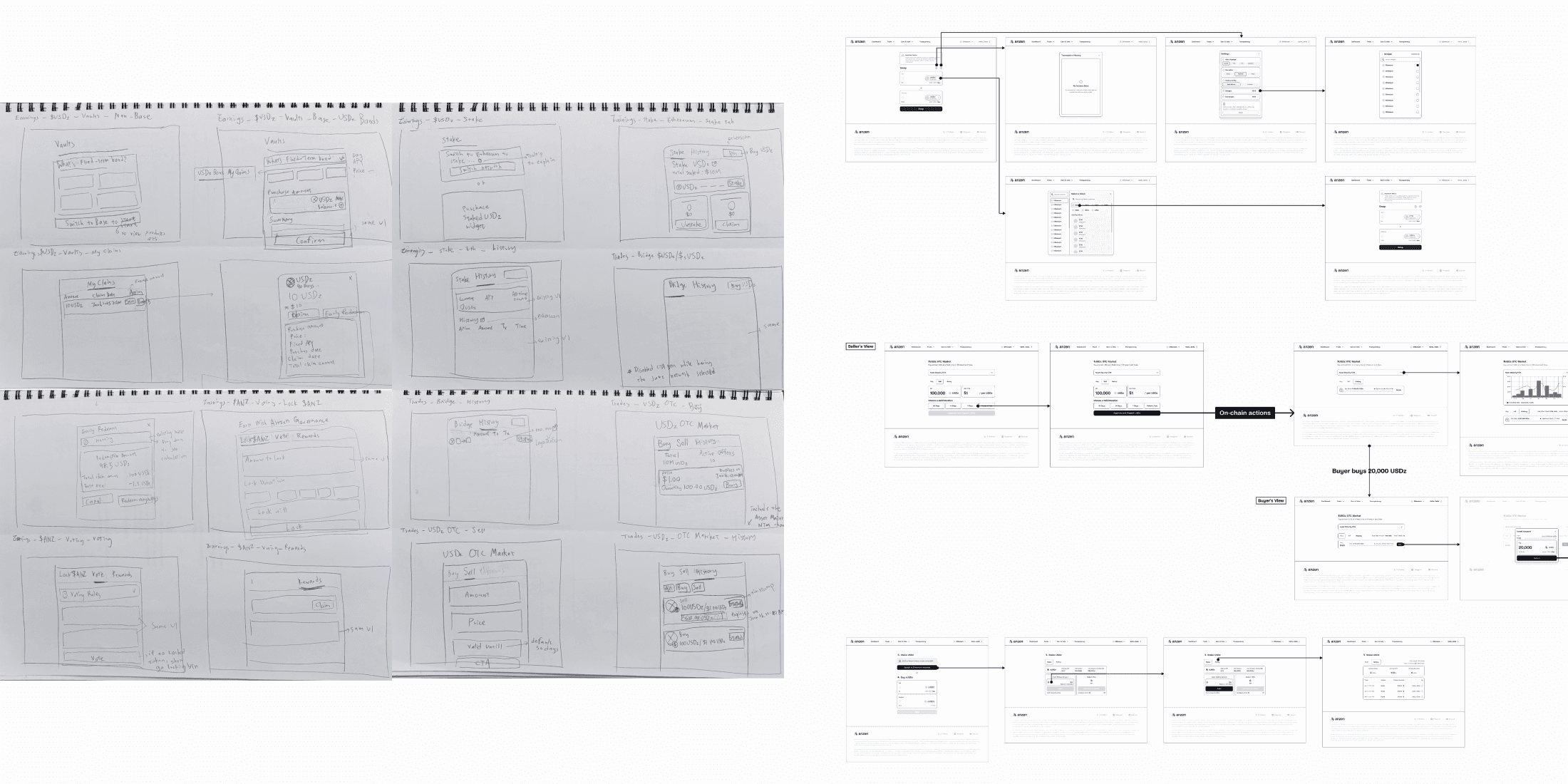
Discovery: walking through and documenting every critical user flow across the product
Flows include:
Swap
Staking
Bridging
Vaults
ANZ locking
USDz OTC market
Dashboard (Portfolio & Ways to Earn)
Transparency and collateral detail pages
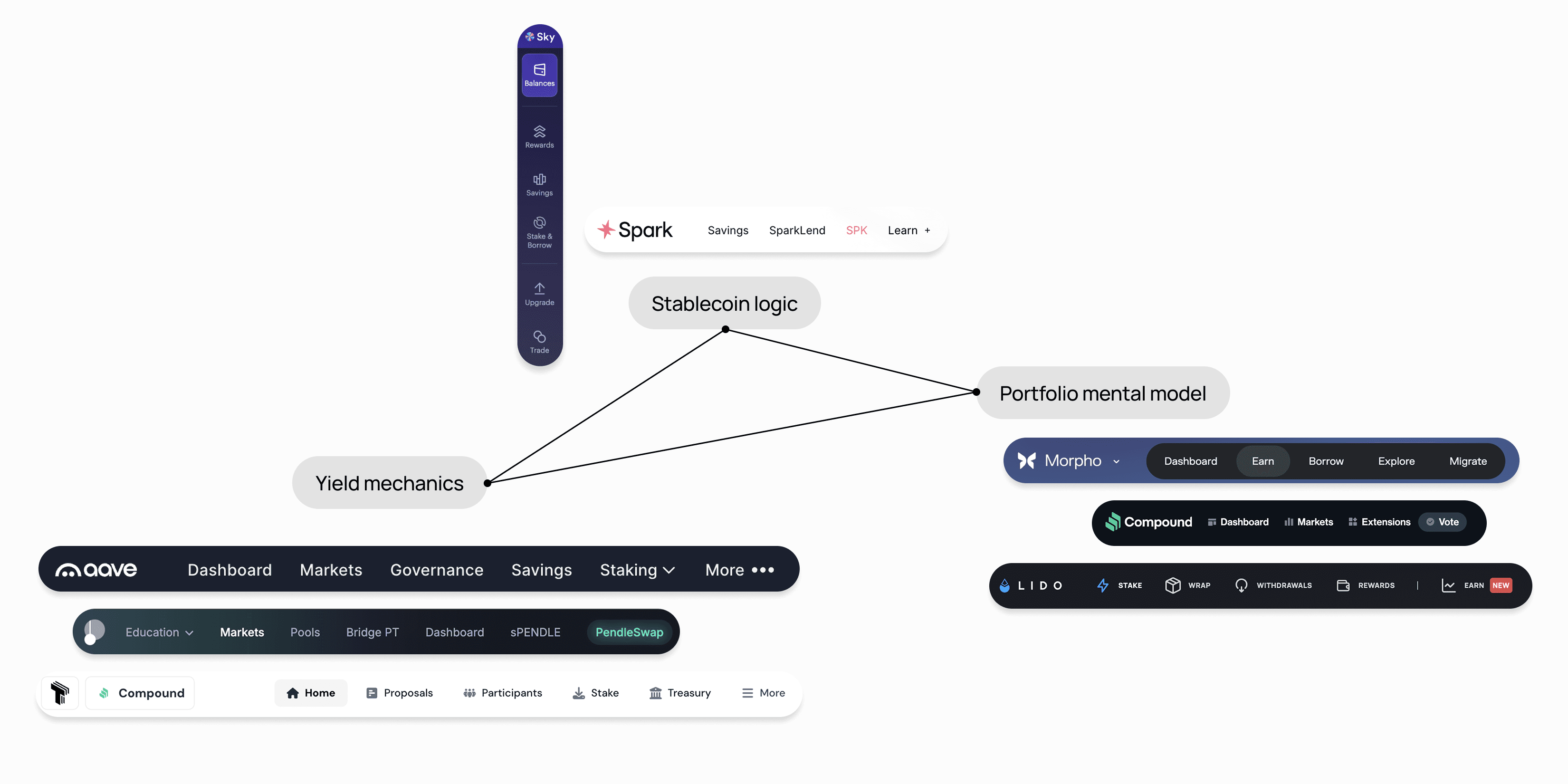
Designing a clearer mental model
What didn’t work
❌ Navigation grouped by internal protocol mechanics rather than user intent
❌ Lack of guidance for next meaningful actions
❌ Limited feedback after wallet confirmation, leaving users unsure about transaction status
Key improvements
✅ Reoriented navigation around user goals
✅ Surfaced contextual next steps by introducing guidance at key moments
✅ Added visibility into transaction and bridging history
✅ Improved transaction state communication to reduce uncertainty
From there, I built wireframes to validate the new structure and flows. Internal usability testing helped validate that users could find what they needed faster and move through tasks with fewer points of confusion.
Contextual guidance for next meaningful actions
In the original experience, users often reached dead ends after completing primary actions. For example, after locking ANZ, governance participation was available but not surfaced, leaving users unaware of what they could do next.
✅ These prompts help users progress naturally through the product, reducing decision paralysis.
Transaction history and on-chain transparency
One major gap in the original experience was the lack of visibility into past actions. Users could complete bridging or staking transactions, but had no clear way to review what had happened afterward.
✅ This improved transparency and reinforced trust by making on-chain data accessible without overwhelming the interface.
Wallet transaction feedback and UI nudges
Another critical issue was the lack of feedback after users signed transactions in their wallet.
✅ These states are communicated through inline messaging and visual cues, helping users understand when to wait, when an action is complete, and what to do next. This reduced uncertainty during high-stakes financial actions and made the experience feel more reliable and controlled.
Finally, we turned powerful DeFi features into a navigable, user-first experience with a scalable component library for consistent interactions.
The redesigned platform reduced redundant steps across key user flows by ~35%, improved task clarity and decision flow, and established consistent interaction patterns through a unified design system.